Live Casino Roulette Wheel: A Skeptical Comparison of Formats and Trust
Live roulette is not a software game with a virtual wheel; it is a physical wheel, a real croupier, and a video stream played in real time. That difference decides everything. It explains why a spin takes a minute instead of a second, why you can see the ball bounce before it lands, and why the dealer announces each result as it happens. The casino does not decide your outcome; the wheel does. What remains with the site is the table limit, the camera angles and the time it takes for your stake and winnings to move across the payment rail.
Understanding the Live Casino Roulette Wheel Experience
The appeal of the live casino roulette wheel lies in its ability to replicate the tactile tension of a brick-and-mortar table without requiring you to leave your home. Unlike random number generator (RNG) games, which rely on abstract algorithms to determine outcomes, a live dealer setup uses a physical wheel, a real croupier, and tangible chips. This physicality provides a layer of psychological comfort; seeing the ball bounce into a numbered pocket offers a sense of transparency that software-based alternatives often struggle to convey. However, this visual reassurance is not a guarantee of fair play or a superior gaming experience. The reality is that the ‘live’ aspect is merely a delivery mechanism for a game whose mathematical house edge remains unchanged regardless of whether the wheel is spun by a human or a server.
When evaluating platforms that offer this format, the decision criteria must extend beyond the quality of the video stream or the attractiveness of the studio set. The primary factors should be regulatory safety, technical reliability, and the specific mechanics of the tables available. For players in the United Kingdom, regulatory compliance is the non-negotiable foundation. A visually stunning studio licensed in Curacao offers no protection against unfair practices or withheld payments if the operator lacks a valid licence from the UK Gambling Commission (UKGC). Similarly, the variety of roulette variants matters significantly; a platform may offer excellent security but provide only a single, slow-paced table that fails to match your preferred style of play.
This article provides a structured comparison of the different live roulette environments available to UK players. We will dissect the operational differences between traditional, speed, and multi-ball formats to help you identify which variant aligns with your risk tolerance and pacing preferences. Furthermore, we will examine the technological infrastructure that underpins these broadcasts, explaining how components like the Game Control Unit (GCU) ensure data integrity. Finally, we will address the practical realities of managing risk in an environment designed to encourage rapid, continuous betting, highlighting the essential responsible gambling tools available to maintain control.
Winbet streams its live casino section through Evolution Gaming, giving players direct access to live blackjack, roulette, baccarat, and game show titles. The tables operate on standard rules with real dealers handling the cards or wheel, which means betting limits vary by specific table instead of across the entire platform. Players can switch between multiple camera angles for a clearer view of the action, though the interface requires a stable connection to avoid lag during card reveals.
Operator comparison: games
Choose the live table over the automated software and you are choosing a pace you can hear. Live roulette, blackjack and baccarat run on cameras and a human croupier, so cards land and the wheel spins in real time. That choice matters because the shuffle is not a hidden algorithm and you can watch every card touch the felt.
The cost of that transparency is speed. A real table cannot deal as fast as a computer, and you will spend a longer session winning or losing a smaller amount per hour. If you want to squeeze many rounds into a short window, automated digital tables are the practical tool. If you want to see the game instead of merely read a result, the live floor is the place to be.
| Brand | Details |
|---|---|
| Alawin | Provider-dependent variants with filterable categories |
| Casinoeuro | European-style rules minimise house edge |
| Winbet | European roulette, blackjack, baccarat and poker variants; demo/free play available. |
| jumpman gaming | Roulette, blackjack, baccarat and poker; availability depends on the individual brand. |
| foxy | Live blackjack, roulette and baccarat; Playtech, NetEnt and Evolution providers. |
Play the version you can watch.
Live Dealer Limits at Alawin
The absence of confirmed live dealer provider names at Alawin creates a blind spot for players seeking specific table limits. Without this data, one cannot determine if the platform supports low-stakes casual play or high-roller tables for Baccarat and Poker. The practical workaround is testing the demo function first; if a table game lacks a demo option, it typically indicates a stricter real-money requirement or a higher minimum bet threshold imposed by the underlying provider.
Live Dealer Access via Casinoeuro
Live dealer tables at Casinoeuro integrate real-time streaming from dedicated studios, ensuring transparency in card dealing and wheel spins. Minimum stakes often start lower than land-based equivalents, making baccarat and poker accessible for varied bankrolls. Connection speed directly impacts stream quality, so users with unstable internet might experience lag during peak hours.
Winbet — demo mode lets you test roulette, blackjack and baccarat risk-free
Winbet lets you practice its table games before committing money, and this is the most practical way to test whether a variant suits your bankroll. European roulette, blackjack, baccarat and a range of poker variants all carry a demo mode, so you can spin the wheel or deal a hand without risking a deposit. Win the hand? You play with fake credits, so any result is instructional instead of financial. The limitation is that the same games rarely pay out bonuses while you are in free play, which means demo mode is excellent for learning rules but a poor substitute for testing how a table contributes to a wagering requirement.
Jumpman Gaming — live tables available only on selected brands
The network’s live dealer offering is deliberately selective. Only selected brands stream live tables from professional studios, so you cannot rely on a group-wide feature when you are choosing between two similarly named sites. Where the live section exists, you get a real dealer and a real wheel instead of a software simulation, which changes how you manage your time because the table moves at a fixed speed. Brands that stop at RNG tables remain perfectly serviceable for quick sessions, but they remove the possibility of interacting with a dealer or other players at all.
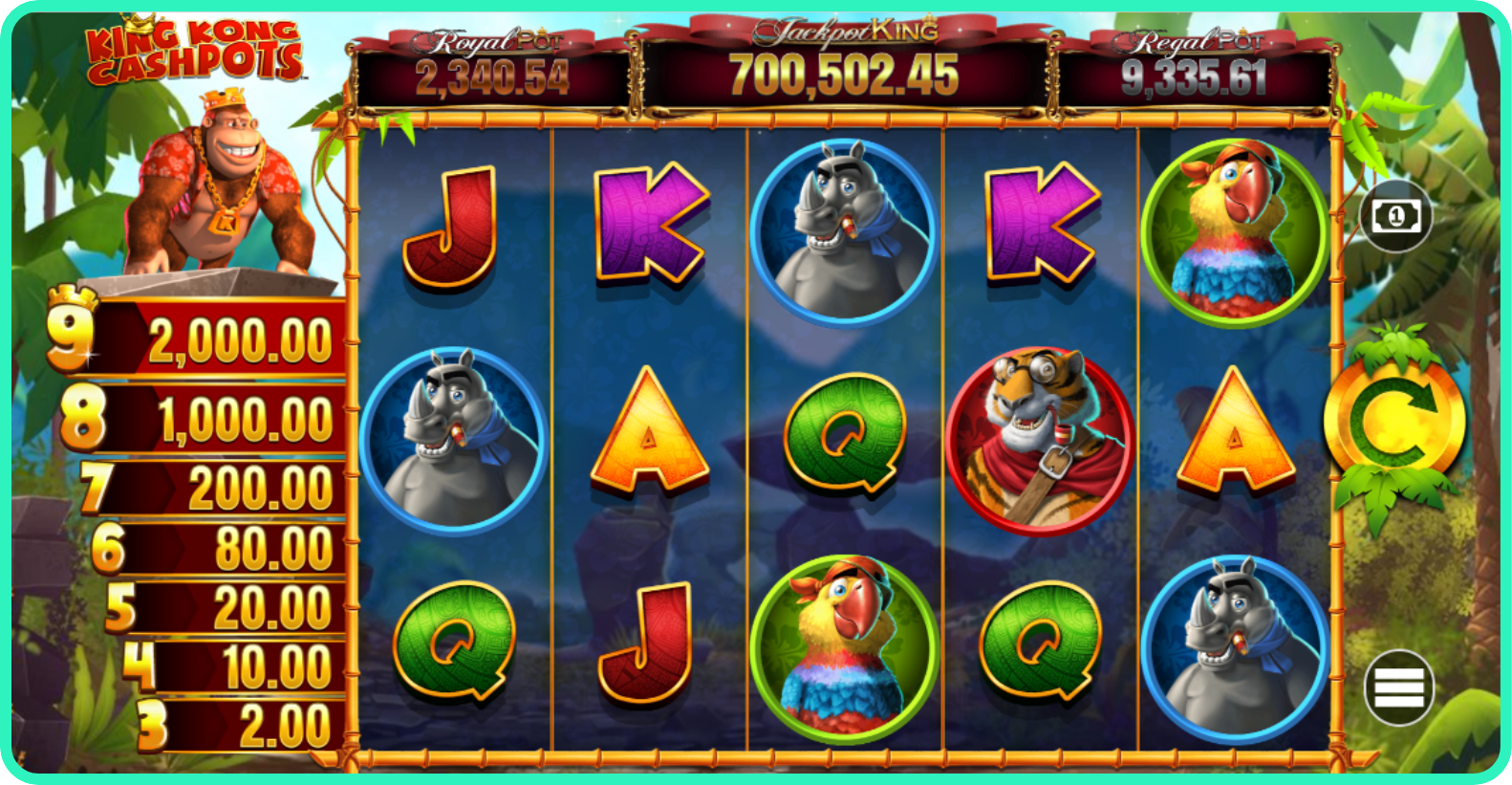
foxy: Access to games
Table games on Foxy are designed as a short diversion instead of a deep catalogue, which shapes how you should approach them.
Comparing Roulette Formats: Standard, Speed, and Multi-Ball
Choosing a live roulette table is less about which wheel looks flashiest and more about how fast your stake disappears. The three main formats—standard, speed and multi-ball—differ mainly in spins per hour, betting window and the way a win or loss lands on your bankroll.
Standard roulette runs one wheel with a human croupier, typically 55 to 70 spins each hour. Players have roughly 20 to 25 seconds to place a bet, so a session of 30 minutes usually means 30 to 35 decisions. That slowness is its main advantage: it gives you time to think through a stake, watch the dealer’s actions and step back if the pace feels wrong.
Speed roulette takes the same wheel but cuts the betting window to about 7 to 10 seconds and removes the spin-to-spin rotation between rounds. Expect 110 to 150 spins per hour—roughly double the standard pace. A 30-minute session can therefore produce 55 to 75 decisions, and money moves accordingly. If you use the same bet size, your hourly exposure roughly doubles.
Multi-ball roulette spins two or three balls on one wheel in a single round. The betting window and spin cycle are similar to speed roulette, but each spin carries several independent outcomes instead of one. That raises variance without changing the table’s base house edge. A single number bet can pay out several times on one spin, and equally can lose three times over instead of once.
| Format | Approx. spins per hour | Betting window | Typical outcome count | Pace feel |
|---|---|---|---|---|
| Standard | 55–70 | 20–25 seconds | One per spin | Measured |
| Speed | 110–150 | 7–10 seconds | One per spin | Fast |
| Multi-ball | 110–150 | 10–15 seconds | Two or three per spin | Volatile |
The numbers above describe how these formats generally behave; individual tables and operators set their own limits. Before players sit down, check the table’s minimum and maximum stake, the bet window and the rules for late bets. If you want a controlled session, standard roulette lets you decide each spin deliberately. If you prefer more action in a fixed time, speed roulette offers it at a higher cost per minute. Multi-ball suits a player who understands variance and has set a firm stop-loss.
Casinoeuro’s live dealer tables run on Evolution Gaming infrastructure, which processes transactions and game states in real time. Unlike RNG versions where bets settle instantly, live blackjack or roulette requires waiting for the current hand to conclude before funds move. This introduces a variable delay depending on table speed, typically adding between thirty seconds and two minutes to the completion of a wager. Players should account for this latency when managing short session limits or attempting to cash out immediately after a round.
The Technology Behind the Spin
Streaming Infrastructure and Latency
A live roulette wheel operates on a low-latency video feed, not a pre-rendered animation. The signal originates from a studio camera positioned directly over the physical table. This footage travels through a dedicated encoder to the player’s browser or app. Any delay in this chain creates a perceptible lag between the ball dropping and the screen updating. Studios mitigate this by using multi-camera angles that switch automatically as the spin progresses. A close-up shot of the rotor ensures the result is visible even if the wide-angle view suffers compression artefacts.
The software interface does not calculate the outcome. It merely displays what has already happened in the physical world. This distinction matters when troubleshooting connection issues. If the video freezes but the betting clock continues, the local device has likely failed to decode the stream, not the server. The bet remains valid because the croupier has physically observed the chip placement. Conversely, if the stream lags significantly, the casino may void bets placed during the frozen interval. Reliable providers use adaptive bitrate streaming, which adjusts video quality based on available bandwidth without stopping the game loop.
Physical Wheel Mechanics and Digital Integration
The core component is a standard wooden wheel, balanced to tight tolerances. Sensors embedded in the rim track the rotor’s position and speed. These sensors transmit data to a central processing unit that syncs with the digital overlay. When the ball lands, optical readers identify the pocket number instantly. This data prevents manual entry errors and updates the results history in real time.
Interaction relies on this synchronization. Players place chips via a touch interface. The system highlights the selected spot on the video feed for all participants. This visual cue confirms the wager before the spin begins. Unlike RNG games, where outcomes are generated at the moment of the click, live roulette outcomes exist independently of the player’s input. The wheel spins regardless of who is watching. This separation ensures fairness but requires robust infrastructure to maintain integrity. Without precise sensor calibration, discrepancies between the physical result and the displayed number would undermine trust in the entire format.
Managing Risk in a Fast-Paced Environment
Live roulette is designed to be engaging, but this engagement can come at a cost. The continuous nature of the game, combined with the social pressure of interacting with a dealer and other players, can encourage prolonged play sessions. This environment increases the risk of rapid financial loss, particularly in speed variants where bets are placed frequently. It is essential to approach live roulette with a clear understanding of its risks and to implement effective controls to protect your bankroll.
The first line of defence is setting strict limits for deposits. Most UKGC-licensed operators require you to set daily, weekly, or monthly deposit limits before players can gamble. These limits are binding and cannot be increased immediately, providing a cooling-off period if you wish to raise them. Use these tools proactively instead of reactively. Determine in advance how much you are willing to lose and stick to that figure. Treat your gambling budget as entertainment expenditure, not as an investment opportunity.
Time-outs and self-exclusion are powerful tools for managing problematic play. A time-out allows you to suspend your account for a short period, ranging from 24 hours to several weeks. This can be useful if you feel that a session has become too intense or if you need a break to reassess your habits. Self-exclusion is a more permanent solution, blocking access to all gambling sites licensed by the UKGC for a specified period, typically six months or longer. These measures are designed to prevent impulsive decisions during moments of frustration or fatigue.
Reality checks are another valuable feature provided by UK operators. These are pop-up notifications that appear at regular intervals during your session, reminding you of how long you have been playing and how much you have spent. Ignoring these reminders can lead to unconscious spending. Make it a habit to review these alerts and assess whether you are still enjoying the game or playing out of habit. If you find yourself chasing losses or feeling anxious about your bets, it is a sign that you should stop immediately.
Vegasino Casino | Mobile access
Finally, seek support if needed. Problem gambling is a serious issue that affects thousands of people. Organisations such as GamCare and Gamblers Anonymous provide confidential advice and support services. If you or someone you know is struggling with gambling, do not hesitate to reach out. Taking responsibility for your play and utilising the available tools is not a sign of weakness, but a demonstration of control and maturity. The goal is to enjoy the game safely, not to fall victim to its inherent risks.
Is the live casino roulette wheel rigged?
No, the physical wheel itself is not rigged. UKGC-licensed operators are subject to strict regulations regarding the maintenance and testing of their physical equipment to ensure fairness. The outcome is determined by the laws of physics, just as in a land-based casino. However, the digital interface and betting platform must also be reliable, which is ensured through the use of certified Game Control Units (GCUs) and regular audits.
What is the difference between European and American live roulette?
The primary difference is the number of zero pockets on the wheel. European roulette has a single zero (0), resulting in a house edge of 2.7%. American roulette has both a single zero (0) and a double zero (00), increasing the house edge to 5.26%. For UK players, European roulette is the standard offering due to its better odds. American roulette is rarely available in UK live casinos.
Can I play live roulette on my mobile phone?
Yes, most UKGC-licensed operators offer mobile-optimised live casino platforms. You can play live roulette on smartphones and tablets using either a dedicated app or a mobile browser. The experience is generally similar to desktop play, though screen size may limit the visibility of certain betting options. Ensure you have a stable internet connection for the best performance.
Frequently asked questions
Can I cancel a bet after it has been placed?
No. Once the bet appears in your betting history it is final. The croupier may announce a short betting window, but the operator’s system decides when that window closes, not the dealer.
What if the video feed freezes while I have a bet open?
Your betting history on the site is the record, not what you see on screen. If a bet is shown there, it is active; if it is missing, the system never registered it and the stake is still available to place.
Use GAMSTOP when you need to exclude yourself from gambling sites
GAMSTOP provides a single point of exclusion for UK-licensed gambling sites. Registering once blocks access across all participating operators, preventing further deposits or account openings without repeated applications. This scheme covers online casinos and sports betting but excludes non-UK licensed platforms. Use it when self-control becomes difficult despite setting limits on individual accounts. Exclusion periods range from six months to five years, chosen at registration. If you need immediate help beyond technical blocking, contact the National Gambling Helpline at 0808 8020 133 for free, confidential support.
Similar Posts:
- None Found